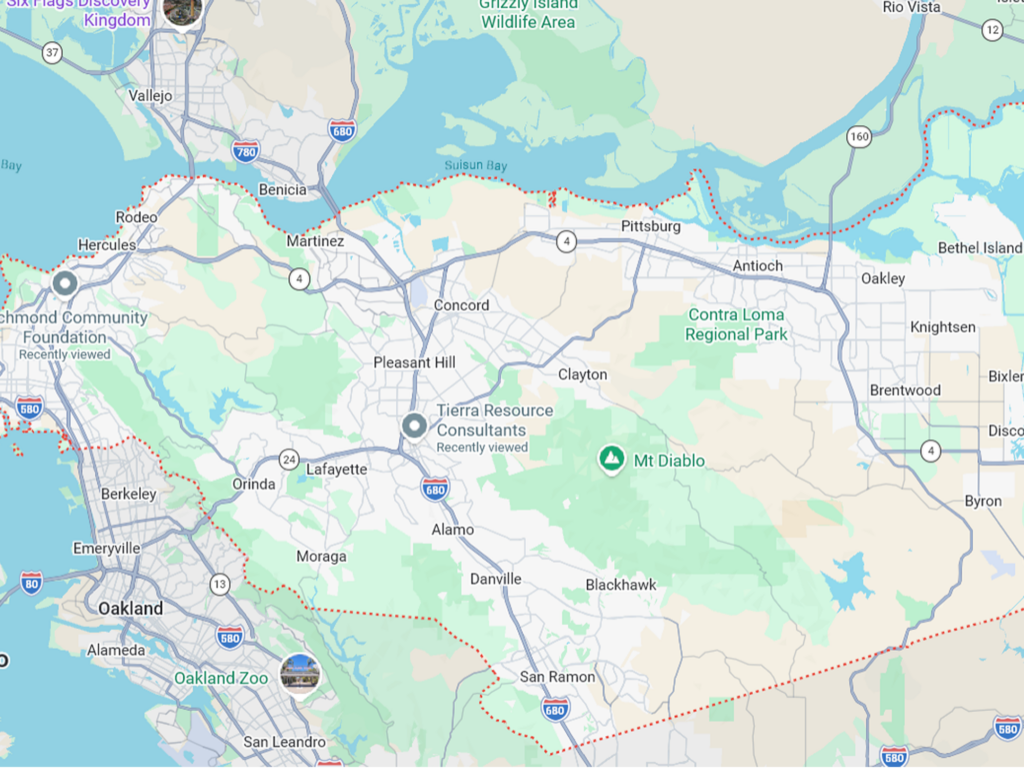
Two adjacent cities at the eastern edge of the Bay Area, home to roughly 198,000 people. Nearly a third live in communities the state designates as disadvantaged. The housing is aging, the air is among the worst in the region, and the households carrying the heaviest energy burdens are the ones least able to do anything about it.
Antioch — population approximately 122,000. An estimated 25% of residents live in census tracts designated disadvantaged under CalEnviroScreen 4.0. Roughly 20,000 households earn at or below 80% of Area Median Income (AMI).
Pittsburg — population approximately 76,000. An estimated 40% of residents live in disadvantaged census tracts. Roughly 11,000 households earn at or below 80% AMI.
Across both cities, approximately 60,700 residents, 31% of the total population, live in disadvantaged communities, and about 31,000 households fall at or below 80% AMI, which is 16%.
Asthma rates in Pittsburg rank above the 97th percentile statewide. Both cities sit alongside Highway 4 and a corridor of heavy industrial land use, producing outdoor air pollution that compounds indoor exposure from gas appliances.
The result is cumulative rather than singular. A household here is likely to be breathing traffic and industrial emissions outdoors, cooking on a gas range indoors, and living in a home built before either was understood as a health issue.
Source: CalEnviroScreen 4.0
Energy burden — the share of household income spent on home energy, is considered affordable below 3%. Across Pittsburg and Antioch, the average sits near 2%.
For the lowest-income households, it does not. Residents earning at or below 30% AMI face energy burdens of approximately 9% in Pittsburg and 11% in Antioch.
During planning, 73% of survey respondents reported financial hardship related to utility bills. Among Family Child Care providers, the figure was higher still.
Source: U.S. Department of Energy LEAD tool; ECCHHC community engagement, 2025–26
The housing stock makes a homeowner-focused direct install model viable, and makes gas appliance replacement the highest-leverage intervention available.
Aging systems in aging homes also mean deferred maintenance. A significant share of low-income households are turned away from existing weatherization and electrification programs entirely, deferred for mold, roof damage, failing plumbing, or electrical panels too small to carry a modern appliance.
Climate change and pollution affect everyone, but not equally. People of color, low-income residents, and immigrant families in Pittsburg and Antioch live in communities that have absorbed a disproportionate share of environmental hazard and climate risk.
These disparities are not accidental. They reflect a legacy of systemic and often racialized practice, redlining among them, that shaped where people could live and work, and in turn shaped housing quality, exposure to pollution, and access to basic resources. Historic disinvestment has been reinforced by zoning, planning, and policy decisions that have not fully reckoned with it.
The pattern is visible statewide. According to the Office of Environmental Health Hazard Assessment, approximately 89% of the population living in California’s most pollution-burdened and vulnerable census tracts are people of color.
Naming this matters to the work. Residents told us during planning that framing home health in terms of environmental justice and historical disinvestment deepened their understanding of why a program like this exists, and why it is being led by community organizations rather than delivered to them from outside.
These conditions shaped every decision in the Healthy Homes Hub’s design: the focus on water heating and cooking, the inclusion of remediation for homes other programs won’t touch, the priority given to Family Child Care Homes, and the decision to deliver through organizations residents already know.